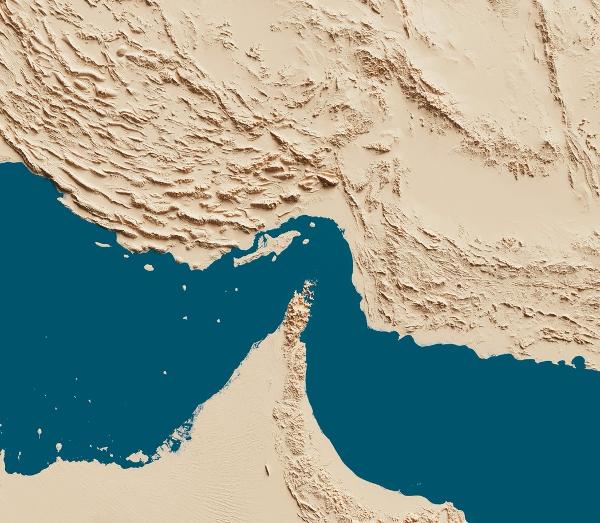

The Trump administration’s attack on Iran provoked a long threatened response, a blockade of the Strait of Hormuz. The global markets for oil, refined products, LNG, and fertilizer were immediately shocked. The greatest impact has been on the diesel market because it is the critical fuel for the world’s markets for agriculture, industry, commerce, and even electricity generation in some countries. Consumers cannot readily substitute another fuel.
Prewar, the Strait saw traffic of approximately 18 to 20 million barrels of oil and refined products per day. In effect, Iran’s blockade cut the traffic to approximately half or 9 to 10 million barrels per day primarily because Saudi Arabia could continue most of its exports from via the Red Sea. When Iran attacked Qatar’s LNG production facilities, almost 20-percent of the global supply of LNG was lost. Qatar’s customers were unable to turn to other suppliers because they were already committed to fixed supply contracts with other buyers. Qatar’s customers turned to using diesel, and this caused demand for diesel to jump between 1.5 million and 2.0 million barrels per day. Adding to the distress in the diesel market, Russia and China both limited exports of diesel. While Brent crude was trading at approximately $100 per barrel, the price of diesel traded above $185 per barrel. Jet fuel traded as high as $200 per barrel.
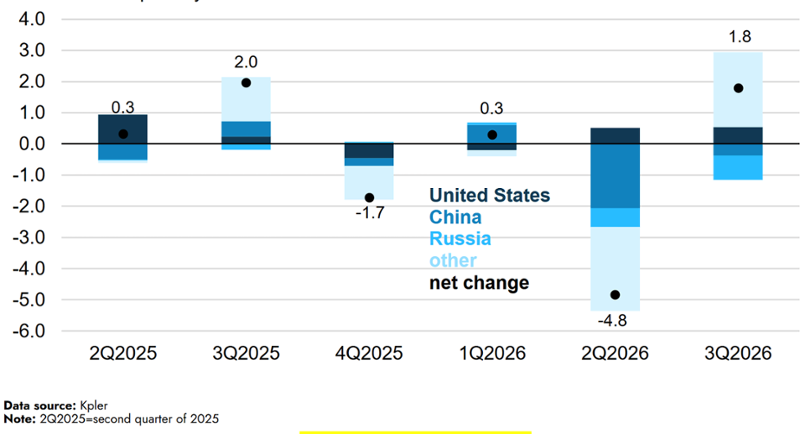
With the price elasticity of demand for crude oil of approximately -0.047, a ten percent decrease in the quantity of oil reaching the market would lead to a crude oil price increase of approximately 250 percent indicating a price of about $200 per barrel. The global market did not feel this impact because Trump and the member states of the International Energy Agency released hundreds of millions of barrels of crude oil and refined products to help keep the prices from rising too much. As noted in the chart below, refinery inputs dropped significantly during the second quarter but recovered due to the releases from the reserves. Unfortunately, those releases are now ending.
Quarterly changes in global crude oil inputs to refineries (2025-2026)
Source: EIA DOE
Global markets have eased further following the U.S. midterm elections. The Trump-led Republicans lost control of the House of Representatives and the Senate. While the handover will not occur until January, the Trump administration will be limited in its ability to continue the war after January. But even if peace breaks out tomorrow, it will take months for the markets to recover. In addition to the blockade, Iran inflicted damage on refineries in the Middle East and because of this, simply restoring oil to prewar supply levels will not return the production diesel, gasoline, or jet fuel to prewar levels.
Without increased diesel supplies, governments have very few options available to ease the pain at the pump for consumers. The Trump administration allowed the sale of diesel without the added of federal road taxes, red dye diesel. This red dye diesel is sold to farmers and ranchers who now find big trucks pulling up at there fuel depots. The benefit to consumers is positive but not widespread. There are few red dye diesel filling stations in the big cities. In commerce, the cost of fuel is fully deductible expense against revenues. There is nothing more to be done. The higher price of diesel must be passed through to consumers.
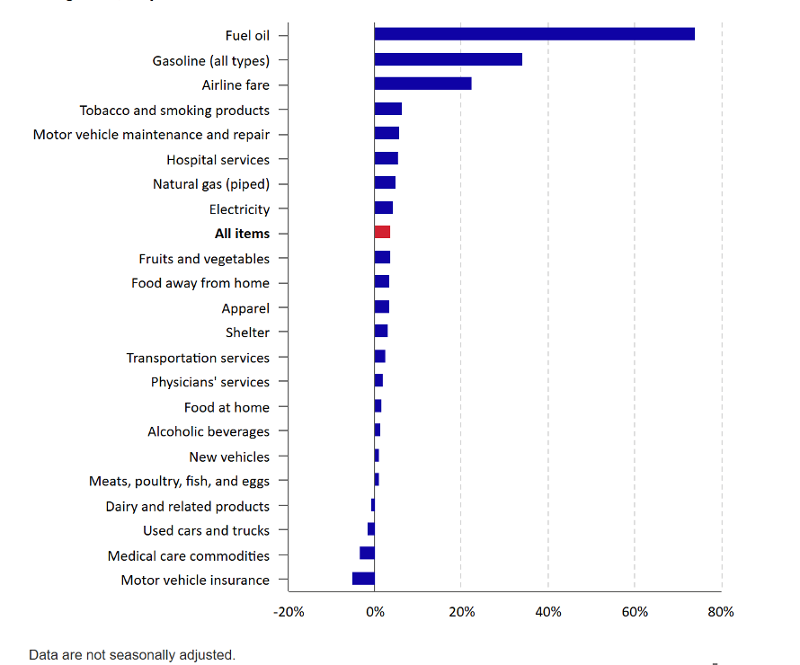
Inflation data in the U.S. shows overall price increases at a rate of growth that is higher than wage growth for much of the past year. The primary driver is the price of fuel oil, that is, diesel. As noted in the chart, any industry that relies on transportation is also passing along the higher diesel price.
12-month percentage change in the Consumer Price Index for selected categories, September 2026
Source: U.S. Bureau of Labor Statistics
The Trump administration has allowed Russia to sell almost 20 million barrels of diesel to the global market. But that is a relatively small amount in the global market. Russian cargoes that had been designated for the U.S. have turned away. Because the U.S. is a net exporter of diesel—almost 1.5 million barrels per day—to the global market, there are no U.S. fuel distributors willing to risk purchasing Russian diesel and selling it to their customers. In the best of times, Russian diesel production is of inconsistent quality.
Because Russia had already restricted its exports of diesel, the impact on the global market of Ukraine’s continued attacks on Russian refineries is minimal.
Diesel consumers across the world will continue paying higher prices until peace returns and infrastructure is rebuilt. But to be fair, a gallon of diesel is still less expensive than a gallon of Starbucks coffee or a gallon of wine.