As the Trump administration continues to roll out its sweeping tariff policy, the North American energy industry is working to address the effects of the President’s tariff strategy. The Trump administration intends to “unleash American energy,” (President Trump's America First Priorities – The White House) in part by imposing tariffs designed to remedy what the administration views as unfair trade practices and increase U.S. domestic energy production. The currently imposed and threatened tariffs will inevitably impact the energy industry and its consumers. The particularly relevant tariffs can be defined in two broad categories: (1) sectoral tariffs, in this case, imposed under Section 232 of the Trade Expansion Act of 1962, and (2) the country-specific and “reciprocal tariffs” that the Trump administration has imposed under the International Emergency Economic Powers Act.
The Trump administration has already imposed Section 232 tariffs that are having, and will continue to have, a lasting impact on the energy industry. For example, energy companies must contend with higher equipment and construction costs as a result of the steep tariffs on steel and aluminum and their derivative products. U.S. imports of such products are currently subject to a 50% tariff with no opportunity to seek exceptions or exclusions. (Adjusting Imports of Aluminum and Steel into the United States – The White House). The increased cost of steel and aluminum will impact virtually every part of the energy sector including electricity, renewable energy, pipelines, and oil and gas exploration and production companies. These increased costs will undoubtedly be passed to U.S. energy consumers in some form and due to the long useful lives of energy assets, may impact energy prices for decades.
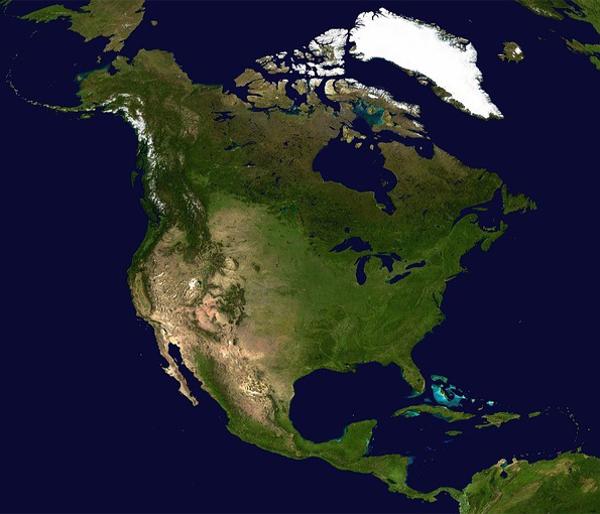
The IEEPA tariffs on Canada and Mexico are also impacting the North American energy sector. According to the Canadian Energy Regulator, Canada provided 70.2% of the volume of hydrocarbons imported by the U.S. (CER – Market Snapshot: Overview of 2024 Canada-U.S. Energy Trade). In 2023, U.S. crude oil imports made up 81% of all energy imports from Mexico. (Energy trade value between Mexico and the United States fell in 2023 on lower fuel prices - U.S. Energy Information Administration (EIA)).
Energy imports from Canada are subject to a 10% tariff, and Mexican imports (including energy) are subject to a 25% tariff. Recent reports indicate that the U.S. and Canada may not be able to reach a trade deal, which could result in a 35% tariff on imports from Canada. (Canada Won’t Accept a Trade Deal With the U.S. at ‘Any Cost’ - The New York Times). Because the costs of importing goods to the United States is increasing, participants in the energy industry are having to reconsider long-term contractual arrangements to determine whether the cost-sharing structures are sustainable. Others have been grappling with termination and force majeure clauses as the costs of completing certain contracts begins to outpace the economic benefit.
The new trade deal with the European Union and potential tariffs on critical minerals and copper could also have a significant impact on the energy sector.
Recently, the U.S. and the EU agreed to a 15% single tariff rate for most EU exports to the U.S. in exchange, in part, for the EU’s agreement to purchase a significant amount of US energy products including US LNG, oil, and nuclear fuels. (Statement by the President on the deal with the United States ). Recent reports indicate that the EU has committed to purchase 750 billion dollars of U.S. energy as part of the deal. (Trump says U.S. has reached trade deal with European Union as Aug. 1 deadline loomed - CBS News).
Critical Minerals and Copper
Potentially forthcoming tariffs on critical minerals will likely impact the energy industry. In April of this year, the Trump administration initiated a Section 232 investigation into imports of processed critical minerals and their derivative products. (Ensuring National Security and Economic Resilience Through Section 232 Actions on Processed Critical Minerals and Derivative Products – The White House). Depending on the results of the investigation, substantial tariffs on the import of critical minerals could impact clean energy technologies like solar, wind, hydrogen, geothermal, and nuclear energy, as well as battery storage.
The Trump administration also announced that 50% tariffs on imports of copper under Section 232 will be imposed on August 1, 2025. Not unlike the steel and aluminum tariffs, an increase in the cost of copper will have a substantial impact on the electricity industry in the United States. For example, comments filed in the Section 232 investigation indicate that the demand for transformers, which are essential components of the electric grid that adjust power voltages for transmission and distribution, is extremely high and U.S. domestic production of copper is not sufficient to meet the demand for the production of additional transformers. Given the limited copper smelting and refining capacity in the U.S., the steep increase in the cost of foreign copper for the U.S. energy industry could have a substantial impact on costs and supply chain. (Regulations.gov).
As the United States tariff landscape continues to evolve, the North American energy markets and their global customers and suppliers will have to be agile as they reconsider supply chain options, contractual arrangements, and opportunities to increase domestic production for the products most critical to maintaining the energy industry as we know it.