
Ensuring the security of energy supplies has become a central concern for both economic and national security, according to the latest World Energy Outlook (WEO) from the International Energy Agency (IEA). Energy lies at the heart of today’s geopolitical tensions, with traditional risks to fuel supply now accompanied by new threats such as restrictions on critical mineral supplies, and risks to electricity supplies from cyber, operational or weather-related hazards. Today’s energy landscape is becoming more complex and fragmented, as countries adopt very different levers to achieve their energy goals. And even as climate risks intensify, momentum behind efforts to reduce emissions has faltered.
Reflecting these shifts, the latest WEO presents an updated set of scenarios – none of which is a forecast – based on the latest data on technologies, policies, and markets. The Current Policies Scenario (CPS) reflects only policies already in place, with a cautious view on the pace of new energy technology deployment. The Stated Policies Scenario (STEPS) considers a broader range of policies, including those put forward but not yet adopted, alongside a faster pace of technology adoption. And an updated Net Zero Emissions by 2050 Scenario (NZE) maps a pathway to reduce global energy-related carbon dioxide (CO2) emissions to net zero by 2050.
In all scenarios, the world’s appetite for energy grows. As economies expand and populations and incomes grow, the world’s need for energy services increases, with rising demand for mobility, heating, cooling and other uses. Renewables again set new deployment records in 2024, and oil, natural gas and coal consumption, and nuclear output, all reached new highs. China contributed more than half of global energy demand growth since 2000, but the energy demand map is changing: future growth will increasingly come from other emerging economies, led by India and Southeast Asia.
The nature of energy security is evolving, especially with acute vulnerabilities in the supply of critical minerals. Refining in particular is highly geographically concentrated: a single country holds an average 70% market share in 19 of 20 strategic minerals. Over half of these minerals now face export controls. Concentration will only decline slowly, so determined action is needed to enhance preparedness and diversify supply chains.
Electricity demand grows much faster than overall energy use in all scenarios, heralding a new Age of Electricity. It rises by around 40% to 2035 in both the CPS and the STEPS, and even faster in the NZE Scenario, driven by appliances and air conditioners, advanced manufacturing and other light industries, electric mobility, data centres, and electrified heating. Rising incomes and temperatures underpin surging air conditioning demand, led by emerging and developing economies. Demand for electricity for data centres and artificial intelligence is also growing fast, typically in tight geographical clusters. Investment in data centres will overtake spending on global oil supply to reach USD 580 billion in 2025, supporting claims that “data is the new oil”.
As electricity becomes more central to modern economies, ensuring its security and affordability is a growing priority. Building new, flexible grids and storage is critical, but at present often remains slow. Concerns are rising over weather-related risks, cyberattacks and other activity targeting infrastructure. Around 200 million households worldwide experienced energy supply disruptions in 2023, with power grids affected in most incidents. And electricity prices are becoming a focus point for consumers and policy makers alike.
Renewables grow faster than any other major energy source across all WEO scenarios, led by solar. Renewables still meet the largest share of total energy demand growth in the CPS, despite headwinds. And although policy changes slow uptake in the United States, renewables continue their rapid expansion globally in the STEPS. Wind, hydropower, bioenergy, geothermal and other technologies also grow. Across the scenarios, nuclear energy sees a revival in investment in both traditional large-scale plants and new designs, including small modular reactors.
Oil markets could follow very different paths. With muted demand growth and rising Western Hemisphere output, markets today look well supplied. Yet in the CPS, underlying declines at existing fields and continued consumption growth result in a need for some 25 million barrels per day of new supply projects by 2035. Electric vehicles (EVs) are reshaping oil demand and are set to surpass 25% of new car sales globally in 2025. In the STEPS, while EV growth projections in advanced economies have been revised down, the share of EVs in new car sales exceeds 50% by 2035, and oil demand levels off around 2030. In the CPS, slower EV uptake supports demand growth out to 2050. The NZE Scenario sees rapid electrification drive steep declines in oil use.
Growing liquefied natural gas (LNG) capacity is reshaping global gas flows, bolstering energy security, and could help reduce prices. By 2030, 300 billion cubic metres of new export capacity – led by the United States – will increase global LNG supply by 50%. Natural gas demand has been revised up in the STEPS, but questions remain about where new LNG will go. Europe and China will absorb some, with further volumes flowing to South and Southeast Asia and elsewhere. However, in the STEPS, markets remain oversupplied in 2030. In the CPS, a slower transition pace absorbs this surplus, but in the NZE Scenario space for new gas demand is constrained.
Significant gaps remain in access to modern energy. Around 730 million people lack access to electricity, while nearly 2 billion rely on polluting cooking methods. Parts of Asia have advanced rapidly, but progress elsewhere has lagged, notably in sub-Saharan Africa. A new Accelerating Clean Cooking and Electricity Services Scenario (ACCESS) provides a data-driven roadmap to achieve universal access to electricity by 2035 and clean cooking by 2040.
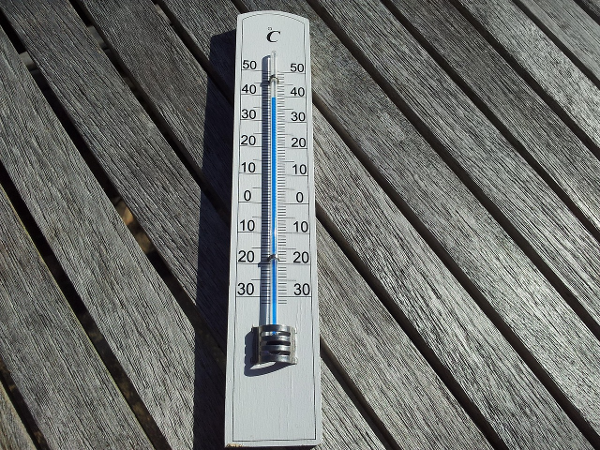
Global temperatures could rise by almost 3 °C in 2100 in the CPS, and 2.5 °C in the STEPS. Annual energy-related CO2 emissions remain close to 2024’s level of 38 gigatonnes (Gt) in the CPS, but drop below 30 Gt by mid-century in the STEPS. Recent trends indicate that overshooting the 1.5 °C target is now inevitable; in the updated NZE Scenario, peak warming exceeds this threshold for several decades, before returning below 1.5 °C by 2100.
Avoiding the worst risks from climate change remains possible: key technologies see strong momentum, and the options to cut emissions are well known. But – ten years after the Paris Agreement – some country-level commitments have waned, and new NDCs do little to move the needle. While policymakers focus on pressing energy security challenges, they must also consider the synergies and trade-offs with affordability, access, competitiveness and climate goals. The WEO scenarios cannot provide all the answers. But they can help illuminate the road ahead, and support evidence-based, data-driven decisions on the way forward.