Europe is heading into winter with an uncomfortable combination: below average inventories in gasoil (heating oil) and natural gas, constrained imports, and limited ability to substitute one heating fuel for another. Recent announcements of emergency oil releases, renewed Russian gasoil exports, and additional Chinese shipments offer some relief. But the unanswered question is whether these measures can stabilize markets before winter heating demand reaches its peak.
As of mid-October, European natural gas storage is approximately 74% full, compared with a five-year average of almost 90%. Meanwhile, based on data from Energy Intelligence, global gasoil inventories have fallen over 100 million barrels (10%) since February. The IEA (International Energy Agency) estimates in its most recent Oil Market Report that combined gasoil exports from Russia and the Middle East declined by 1.3 million barrels per day, but higher exports from a number of countries, including China and the US offset about half of the loss, leaving global exports 700 thousand barrels per day less than a year earlier.
Europe’s two-fuel problem
These are not encouraging numbers for a continent that depends on both natural gas and heating oil to keep households and businesses warm. When natural gas prices rise, power generation and some industrial consumers switch to alternative fuels. However, substituting gasoil for natural gas becomes considerably less attractive when distillate prices also are exceptionally high. At the same time, reducing diesel consumption does little to reduce Europe’s dependence on imported LNG.
According to the IGU (International Gas Union) World LNG report for 2026, about 65% of Europe’s LNG exports are purchased through spot deals, rather than long-term contracts. The loss of substantial LNG exports from the Middle East increases Europe’s exposure to international competition, particularly from Asian buyers. The result is a winter energy market in which both primary sources of heating fuels face elevated prices and limited inventory cushions. This does not mean Europe is heading toward inevitable physical shortages. What inventory exists plus continuing imports and demand flexibility provide important protections. But a prolonged cold spell could rapidly change the market balance, especially if accompanied by additional refinery outages or LNG shipping disruptions.
More gasoil is coming, but not enough
Two recent developments could ease the gasoil squeeze: (1) the IEA announces on October 2 plans to accelerate emergency stock releases, including more than 20 million barrels of gasoil and (2) the reported Trump-Putin arrangement could facilitate roughly 13.5 million barrels (1.8 million metric tons) of Russian gasoil exports over the next few months.
The waterfall chart below shows how these three developments are not sufficient to replace the 1.7 mmbd loss of availability in the third quarter of this year identified by the IEA in its October Oil Market Report. Assuming all of three developments are fully executed, the world diesel supply availability would still be almost 0.6 mmbd short.
Global Gasoil deficit (mmbd)
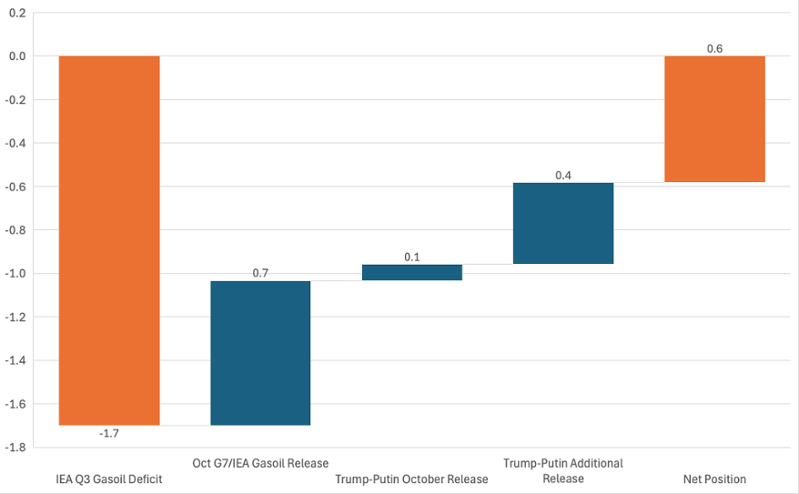
Source: Elaboration on IEA, Reuters, BBC
Winter will test Europe’s energy resilience
The immediate challenge is not necessarily a shortage of fuel, but a loss of resilience and market flexibility. Emergency gasoil releases and renewed Russian exports can help stabilize markets. However, they cannot fully replace lost production from the Middle East and Russia, eliminate Europe’s dependence on spot LNG cargos, nor guarantee adequate inventories during a colder-than-normal winter.
Europe must balance three competing priorities: (1) keeping fuel affordable now, (2) preserving inventories for later this winter, and (3) maintaining sufficient supply flexibility to respond to another disruption that might occur in the future. A mild winter could make these challenges more manageable, but a prolonged cold spell could expose just how little margin for error remains.
Five strategic options for Europe
Europe has options, but the most effective strategy would combine near-term supply measures with coordinated inventory management and targeted demand management. These options include:
1) Cordinate natural gas and gasoil security: European governments should assess space heating fuels as an integrated energy security issue rather than managing natural gas and petroleum inventories separately. A common winter risk assessment could identify countries and regions most exposed to simultaneous shortages.
2) Prioritize finished gasoil in emergency stock releases: releasing crude oil does little to address immediate gasoil supply concerns when refinery capacity is constrained. Finished gasoil should be directed toward markets with greater inventory deficits, while preserving emergency stocks for January and February.
3) Keep European refineries operating: rising crude oil costs and expensive tanker freight rates making refining margins uncertain and threaten utilization. Temporary financing or logistical measures that prevent avoidable refinery shutdowns may deliver greater benefits than additional crude oil inventories.
4) Secure additional LNG volumes while reducing discretionary demand: Europe should pursue additional LNG cargoes from reliable suppliers, including the United States, while expanding voluntary industrial demand response programs and improving efficiency measures.
5) Protect vulnerable households without encouraging unnecessary consumptions: targeted financial incentives is preferable to broad fuel price subsidies that weaken conservation incentives and potentially increase demand when supply is tight.
The critical question is whether Europe can reduce demand and rebuild supply resilience faster than winter draws down its remaining energy reserves. Beyond this winter, Europe should assess whether its remaining refining capacity, gasoil storage, LNG infrastructure, and cross-border connections provide adequate protection against future simultaneous fuel disruptions.