

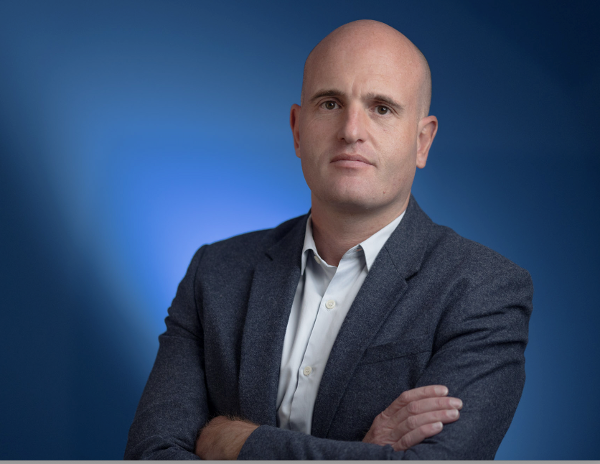
Talking about data centers from every angle. This is what we attempted to do with Davide D'Ambrosio xxx of the IEA, author of several publications dedicated to the sector. The world of data centers is constantly evolving; the number of infrastructures is growing, as are consumption and efficiency. This rapidly growing sector is increasingly important for the global economy and an undisputed player in the energy landscape for the coming
The largest technology companies are driving a surge in data centre investment. How fast is the buildout actually moving — and how much of it will materialise?
The pace is remarkable. Capital expenditure by the largest technology companies exceeded USD 400 billion in 2025 and is expected to jump by a further 75% in 2026. The spending of just five companies is now larger than global investment in oil and natural gas production. The IEA's satellite-based tracking shows that "AI factories" — cutting-edge data centres designed specifically for AI — have more than tripled in capacity in the past 18 months. At the same time, project pipelines are swelling far beyond what is under construction, and not all announced projects will come to fruition. Investments of this scale can no longer be funded from company balance sheets alone, so the pace of the buildout will be sensitive to capital markets, expectations of returns on AI, and broader financing conditions.
A year after the IEA's landmark Energy and AI report, what has changed? Energy per query is falling fast, yet new applications are far more energy-hungry. Which force is winning?
Both trends accelerated, and that is precisely the story. Measured per task, the energy efficiency of AI is improving at a rate unprecedented in energy history — energy use per AI task has been dropping by at least an order of magnitude annually. A simple text query now typically consumes less electricity than running a television for the same amount of time; if all conventional internet searches became simple AI queries, they would add less than 4 TWh per year, under 1% of today's data centre consumption. But far more energy-intensive applications — video generation, reasoning models, agentic AI — can consume hundreds or thousands of times more energy per query, and they are taking off. With major model providers reporting a threefold increase in active users and a fivefold increase in revenue in a year, surging uptake and new capabilities are so far outpacing efficiency gains: electricity use by AI-focused data centres surged 50% in 2025.
Data centre electricity demand grew 17% in 2025, in line with IEA projections. What is the outlook for the coming years?
Our central projection remains close to last year's trajectory: global data centre electricity consumption roughly doubles from 485 TWh in 2025 to 950 TWh in 2030, reaching around 3% of global electricity demand. Consumption by AI-focused data centres grows much faster, tripling over the period. Two nuances matter. In the near term, bottlenecks across the value chain are reducing the likelihood of the more aggressive scenarios, despite booming investment. Beyond 2030, however, there is possible upside: if investments relieve the bottlenecks in energy equipment and chip manufacturing, and energy-intensive AI use cases keep spreading, demand could exceed our central case. The IEA will continue to update its projections regularly.
A scramble has set in across the AI value chain — for grid connections, turbines, chips and capital. Which bottlenecks matter most, and are onsite generation and batteries real solutions?
Bottlenecks have tightened across the board: a shortage of high-bandwidth memory for AI chips is expected to persist through at least 2027, gas turbine orders surged 70% in 2025, and supply chains for transformers and power electronics are being tested by an elevenfold increase in AI server power density since 2020 — with a further fourfold rise expected by 2027. Constrained by slow grid connections, US developers are turning to onsite gas-fired generation: around 15-27 GW could power data centres by 2030, though serving such variable loads reliably requires overbuilding capacity by 30-70%. Batteries are also becoming critical, with 20-25 GW potentially installed in data centres globally by 2030 — which could turn them into grid-friendly assets. But most data centres still prefer the grid, so these workarounds do not remove the urgency of fixing grid bottlenecks.
Data centres have become a flashpoint for concerns about electricity prices. Will the AI boom raise people's bills?
Not necessarily — it depends on fundamentals and policy choices. In tight systems, large new loads can trigger investments that raise prices; in systems with spare capacity, predictable baseload demand can improve the utilisation of grids and power plants and actually lower prices. The real risks come from the mismatch between fast-moving data centres and slow-moving energy investment, and from uncertainty over actual loads, since developers often oversize grid connections. Policy is the key: proactive management of connection queues and project pipelines, better demand disclosure from technology companies, fair cost-allocation through tariff design, and flexibility — including non-firm connections and demand response in exchange for faster hook-ups — can ensure data centres support, rather than strain, electricity systems.