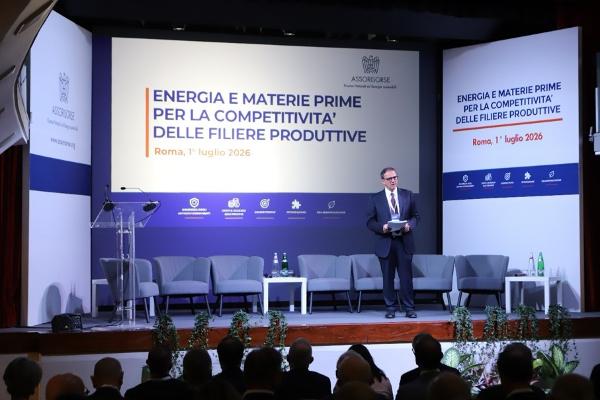

The revision of Europe’s carbon market has become a proxy for a much bigger argument about the future of European industry. This week, Italy and the Czech Republic insisted on calling for softer carbon-market rules to reduce energy costs. Yet, other governments, companies and investors continue to stress the value of a stable carbon price for long-term investment in Europe’s industrial future.
The debate is no longer neatly split between “industry” and “climate”, though. Some of the sharpest disagreements now run within the same sectors, between companies and even between businesses and the associations that represent them. The debate is ultimately about how to reconcile competitiveness with decarbonisation.
One carbon price, different strategies
The EU Emissions Trading System (ETS) puts a price on emissions from power stations, heavy industry, aviation and shipping. Companies need a permit for every tonne of carbon they emit, while the total number of permits falls over time. Emissions in the sectors it covers have fallen by around half since 2005. The next phase is harder. Cutting emissions from steel, cement or chemicals often means replacing core production equipment, securing much more clean electricity or building new infrastructure.
Companies do not all enter this phase from the same starting point. But those starting points are not simply imposed on them. Some businesses invested early in cleaner technologies, changed their business models and started developing markets for clean products. Others have continued to invest around existing high-emission assets, or postponed hard decisions about how their businesses will compete in a lower-carbon economy. Governments have also made choices. Countries that expanded renewables, strengthened grids or invested in infrastructure have changed the options available to their industries.
Those choices now shape positions on the ETS. A company that has invested in cleaner production has an interest in a predictable carbon price that preserves the value of that investment. A company whose current assets face higher costs may place greater weight on short-term relief. Similarly, among the European countries most vocal against the ETS are those most exposed to high fossil fuel prices, such as Italy, despite the ETS being part of the solution to reducing that dependence.
Competitiveness is also about renewal
Europe faces real immediate pressures: high energy costs, weak demand in some sectors and strong international competition. Policymakers therefore worry about production or investment moving abroad. But the difficulties facing Europe’s energy-intensive industries did not begin with today’s carbon price. The European Commission describes two decades of persistent competitive pressure, declining production and rising import dependence in sectors such as steel, chemicals and aluminium. European steel production is now far below pre-financial-crisis levels, while the chemicals sector has also suffered plant closures and lost capacity in recent years.
Those changes what “protecting industry” means. Europe is unlikely to build a durable competitive advantage around a hope for cheap fossil fuels: it imports most of them and remains highly exposed to global price shocks. A business model that depends on permanently cheaper gas than Europe can access is therefore a difficult foundation for long-term competitiveness. Modernising production, expanding clean power and improving energy efficiency are therefore not simply climate objectives. For many industrial activities, they are part of the economic case for keeping production, investment and jobs in Europe.
The carbon market has a particular role in that renewal. By making emissions more expensive, it improves the relative economics of cleaner production. It also raises public revenues that can be reinvested in the transition and gives companies a clearer basis for long-term investment decisions. But a carbon price cannot build a grid connection, create demand for green steel or make electricity affordable. Much of that responsibility sits with Member States. National governments shape power systems, infrastructure, permitting and the use of carbon-market revenues. The success of the ETS therefore also depends on governments doing their part to create the conditions in which companies can invest – instead of simply blaming Brussels.
A new bargain around the carbon market
The European Commission’s July proposal reforming the ETS reflects these pressures. It would keep the basic carbon-market system but give industry more flexibility after 2030, including a slower withdrawal of free permits for industries covered by Europe’s new carbon border charge. At the same time, it would create a new €100 billion EU fund for cleaner industrial investment, direct more carbon-market revenues towards industrial transformation and link continued free permits more closely to companies investing in Europe.
Framing the review as “ETS: yes or no?” misses the point. The real argument is about the bargain around it: how much protection companies receive, what they do in return, how predictable the carbon signal remains, and whether Europe turns the money and incentives created by carbon pricing into industrial renewal. The answers to these questions reflect competing views on how to keep European industry competitive: by cushioning existing business models for longer, by accelerating investment in new ones, or - as many companies will have to do - by managing both at the same time. The ETS review is bringing those choices into the open. But something is clear: the decision is not just about the price of carbon today, it is about which industrial model Europe makes viable for tomorrow.